There is a sound no documentary has ever properly captured.
It begins as a low tremor you feel in your chest before you identify it as sound. Then the dust rises above the tree line. Then the noise arrives in full: hooves, grunts, snorts, and the particular croaking groan of wildebeest pushing toward the Mara River. When the first animal goes over the bank, everything changes.
A wildebeest migration safari in Kenya is not simply a wildlife trip. It is one of the few remaining places on Earth where nature operates at a scale that makes humans feel genuinely small. No amount of reading fully prepares you. But knowing how to plan it, the right month, the right camp position, the right number of nights, is what separates witnessing the migration from being nearby when it happens.
What Is the Great Wildebeest Migration?
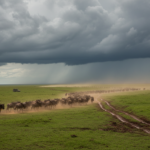
The Great Migration is the largest overland animal movement on Earth. Every year, approximately 1.5 million wildebeest, 200,000 zebra, and 350,000 gazelle complete a circular journey of roughly 1,800 kilometres across the Serengeti-Mara ecosystem, driven entirely by the seasonal movement of rainfall and fresh grass.
The migration is a continuous, year-round cycle. It does not happen on a fixed date, and it is not a single event. But it has a defining peak: in Kenya, in the Masai Mara National Reserve and the surrounding community conservancies, between July and October, when the herds reach the Mara River.
The Mara River crossing is what most visitors mean when they talk about “the migration.” It is the moment when columns of wildebeest hurl themselves down steep river banks, swim through churning water under crocodile pressure, and scramble up the far side. It is intense, unpredictable, and unlike anything else in wildlife.
Why Kenya for the Migration
The migration spans two countries: Tanzania and Kenya. Both offer migration viewing, but they deliver different experiences.
Tanzania’s Serengeti provides calving season (January to March) and the long northward build-up. For calves, predator drama, and the early phases of the movement, Tanzania is the right destination.
Kenya, specifically the Masai Mara, provides the Mara River crossing season from July through October. If the river crossing is the image you have been wanting to see, Kenya is where that happens. The reasons are practical:
- Multiple active crossing points within a compact area, meaning you can position for crossings without multi-hour drives
- Community conservancies surrounding the national reserve provide exclusive access with far fewer vehicles than the main reserve
- The July to October dry season gives consistently good weather and photography conditions
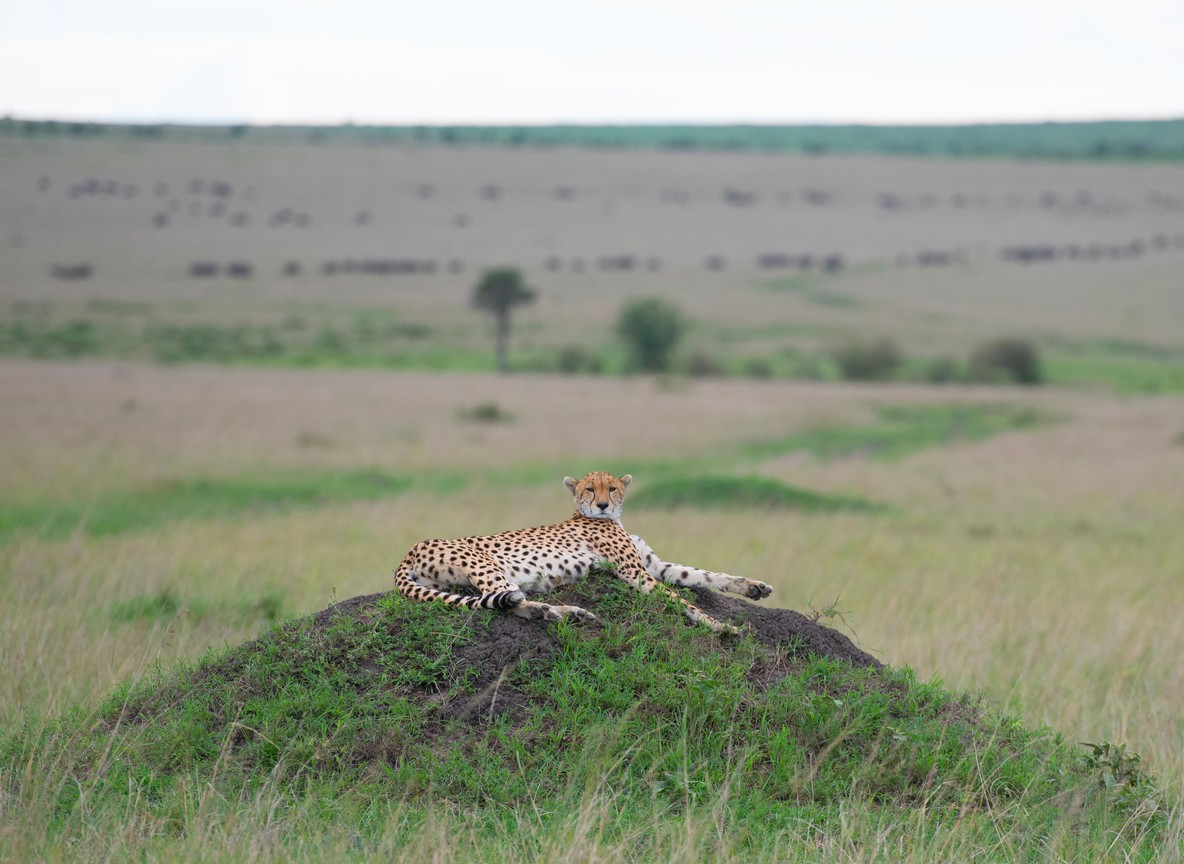
- The Mara ecosystem has among the highest lion and cheetah densities in Africa, so even days without a crossing are full of wildlife
When to Book: Month-by-Month Breakdown
Timing is the most consequential decision in migration safari planning.
July: The Arrival
The leading herds begin crossing into Kenya in late June and July. July is often the best month for first-time migration visitors: crossings are starting, the peak crowds have not yet arrived, and the weather is reliably dry. Camps fill early for July; book six to nine months ahead.
August: Peak Season
August is the peak migration month in the Masai Mara. The highest concentrations of wildebeest are in Kenya, crossings are happening regularly at multiple river points, and predator activity following the herds is intense. This is the highest-demand, highest-cost window. Premium conservancy camps can sell out 9 to 12 months before arrival. If August is your target, plan accordingly.
September: The Balanced Choice
Many experienced guides and returning safari travelers name September as the strongest single migration month. August crowds have thinned, prices ease slightly from their August peak, but the herds remain in the Mara in large numbers and crossings continue. The light in September is exceptional: clear, golden, with low humidity. For photography, September often outperforms August.
October: The Return Movement
By late October, short rains approaching in the south begin pulling the herds back toward Tanzania. Early October still offers crossings and large concentrations. By month’s end, numbers are thinning. A strong choice for budget-conscious travelers if late October is the only available window.
Conservancy vs National Reserve: The Decision That Matters Most
This choice separates a good migration safari from a genuinely different experience.
Inside the Masai Mara National Reserve
The national reserve is where vehicle concentration peaks, particularly during crossing activity. On a busy August day at a popular crossing point, 50 to 80 vehicles can line the bank. The wildlife is undeniably present. The experience can feel managed and crowded.
The Mara Community Conservancies
The conservancies surrounding the reserve, including Mara North, Olare Motorogi, Ol Kinyei, and Naboisho, cover more than 500,000 acres of Maasai community land. They operate strict vehicle limits, typically 6 to 10 vehicles across each conservancy at any time. Wildlife moves freely between reserve and conservancy land. Crossing events happen on conservancy land too.
What conservancy access provides:
- Exclusive positioning: you may be the only vehicle at a crossing
- Off-road driving permitted, allowing proper photography angles
- Night game drives (not permitted inside the national reserve)
- Walking safaris, which are extraordinary during migration season
- A Maasai community connection alongside the wildlife
For most travelers, a conservancy camp provides a meaningfully better migration experience than the national reserve alone.
Choosing a Camp: What Actually Matters
Camp placement on a migration safari matters more than almost any other variable. Being 15 minutes from an active crossing point when activity begins is the difference between witnessing it and hearing about it from other guests at dinner.
Proximity to the Mara River: The best migration camps are within a 15 to 20-minute drive of multiple crossing points. Ask specifically, not just “near the Mara” but “how far is the camp from the Purungat Bridge area and the Sand River crossing?”
Vehicle access and type: Private vehicles give you control over timing and positioning. Shared vehicles involve compromise. For a migration-focused trip, knowing who else is in your vehicle and what their priorities are matters.
Guide quality: A river crossing can begin and end in 20 minutes. A guide who reads the signs early, knows the access roads, and understands crossing behavior gives you the best chance of being in position when it starts. Ask your operator how long their lead guides have been working the Mara specifically.
Migration Safari Itineraries: Structures and Rough Costs
4-Day Migration Safari
- Day 1: Nairobi to Masai Mara by fly-in or road
- Days 2 to 3: Full-day game drives focused on crossing zones, morning and evening drives
- Day 4: Morning drive, depart for Nairobi
- Cost range: from around USD 1,100 per person (shared vehicle, mid-range camp)
- Best for: First-time safari visitors, tight schedules
6-Day Migration Immersion
- Days 1 to 2: Travel and settling in
- Days 3 to 5: Full-day migration drives, optional Maasai visit and walking safari
- Day 6: Departure
- Cost range: from around USD 2,200 per person (private vehicle, conservancy camp)
- Best for: Returning safari guests, photographers, couples
8 to 10-Day Kenya Circuit with Migration
- Masai Mara (4 nights) combined with Amboseli or Lake Nakuru (2 to 3 nights) and optional coast extension
- Cost range: from around USD 2,800 per person
- Best for: First-time Kenya visitors wanting more than one ecosystem
Prices vary significantly by camp standard, vehicle type, and season. These figures are starting-point guides, not fixed quotes.
What Happens at a Mara River Crossing
Understanding the anatomy of a crossing helps you know what to watch for.
Before the crossing: Wildebeest stack on the far bank in their thousands. They test the edge, retreat, return. This can last 20 minutes or three hours. The tension builds regardless.
The trigger: One animal commits. It is rarely the largest or most confident-looking animal. When it enters the water, hundreds follow within seconds. The trigger is social, not environmental.
In the water: Crocodiles wait in the deeper sections. They are selective, targeting isolated or exhausted animals. The main column pushes through regardless.
The scramble up: The far bank is steep, muddy, and churned within minutes. Animals fall back, some are pushed under. The survivors run and the column keeps moving.
After: Silence, then the next group begins stacking on the bank.
A typical crossing lasts 15 to 45 minutes. In a strong August week, you might witness three to five crossings. Some days there are none. The unpredictability is the point.
Frequently Asked Questions
Can crossings be predicted in advance?
Not with precision. Experienced guides read the signs well: time of day, behavior of leading animals, density of stacking on the bank, weather patterns. Good operators have a strong success rate in positioning guests at active crossings. No one can guarantee a crossing on a specific day.
How far in advance should I book?
For July and August, aim for 9 to 12 months ahead. For September, 6 to 9 months. The best conservancy camps have very limited capacity and fill early. If you are reading this in January for an August trip, act now.
Is the migration suitable for children?
Yes, with age-appropriate preparation. The crossing is intense and involves natural predation, which some children find distressing without context. Most guides are experienced at adjusting their explanation for different ages. Recommended for children five years and older.
Should I fly in or drive to the Mara?
Fly-in from Nairobi (45-minute charter) maximizes your time in the bush and is strongly recommended for trips of four days or fewer. Road transfer (5 to 6 hours) is more affordable and can be a good option for guests who enjoy the journey through Kenya’s landscape. Both work.
What should I pack for a migration safari?
Neutral-colored clothing (khaki, olive, tan), warm layers for early mornings, a camera with a zoom lens of at least 300mm, binoculars, sunscreen, and a dust cover for electronics. Soft-sided bags are required for domestic flight luggage limits (15kg per person at Wilson Airport).
Explorer Notes: Planning Decisions That Matter
Book enough nights. Three nights is a minimum for reasonable crossing odds. Four to five nights gives you significantly better chances and allows for non-crossing days without the trip feeling like a failure.
Prioritize guide quality over camp luxury. A strong naturalist guide in a mid-range camp will give you a better migration experience than a weak guide in a top-tier lodge. Ask operators specifically about their guides’ experience in the Mara.
Keep a buffer for delays. Nairobi traffic and domestic flight connections require realistic time buffers. A same-day JKIA arrival and Wilson Airport departure is achievable, but allow at least three hours between landing and your domestic flight.
Combine ecosystems if time allows. Adding two nights in Amboseli (Mount Kilimanjaro backdrop, large elephant herds) or Lake Nakuru (flamingos, rhino) to a Mara migration safari creates a fuller picture of Kenya’s wildlife diversity.
Conclusion
A wildebeest migration safari in Kenya rewards travelers who plan carefully and arrive with realistic expectations. The river crossing cannot be guaranteed. The waiting is part of the experience. The moments that stay with people for years are usually the ones that did not appear on the printed itinerary.
What planning gives you is position: the right camp, the right guide, the right number of nights, at the right time of year. From there, the Mara does the rest.
Related Reading
- The wildebeest migration route: the full circuit explained
- What to expect on a migration safari: the real day-by-day experience
- Wildebeest migration photography in Kenya: planning the shot
- Wilson Airport vs JKIA: navigating Nairobi’s two airports
- Trunktrails Safaris is a Nairobi-based, Kenyan-owned operator specializing in Mara conservancy access and migration safari itineraries.
Have questions about this itinerary or destination? Get answers from a safari specialist before you commit.
Inquire More